Fractional CFO Services That Turn Financial Data Into Executive Decisions
APR provides senior financial leadership for organizations that need more than bookkeeping, accounting support, or backward-looking reports, but are not ready for a full-time CFO.
Signs You Need a Fractional CFO
Cash position is unclear or frequently changes without warning.
Financial reports are delivered without meaningful interpretation.
Growth has outpaced your financial controls and reporting routines
Budgets are prepared but do not meaningfully guide decisions.
Leadership or the board cannot see emerging risks.
The CEO is acting as the final financial decision maker.
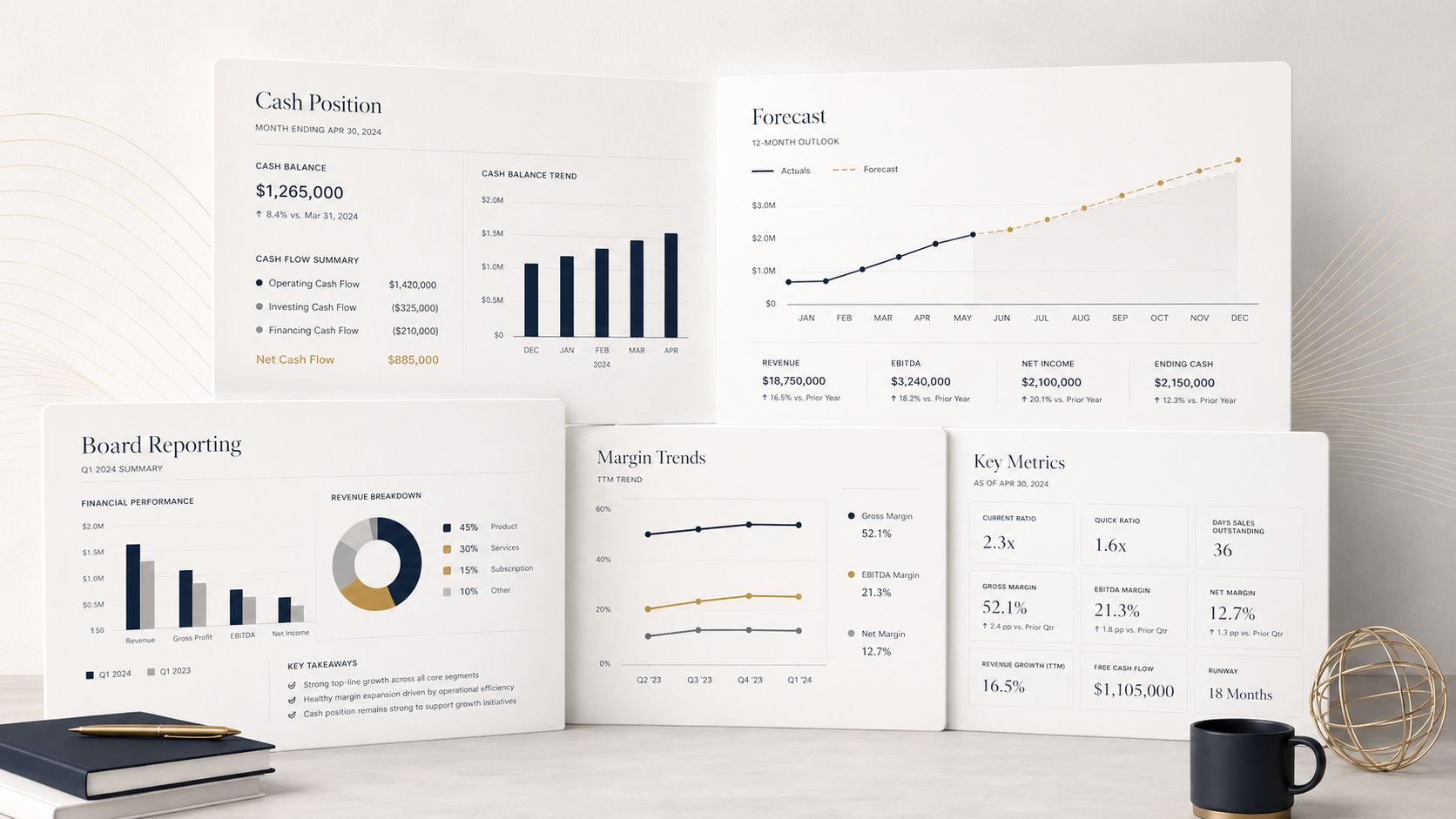
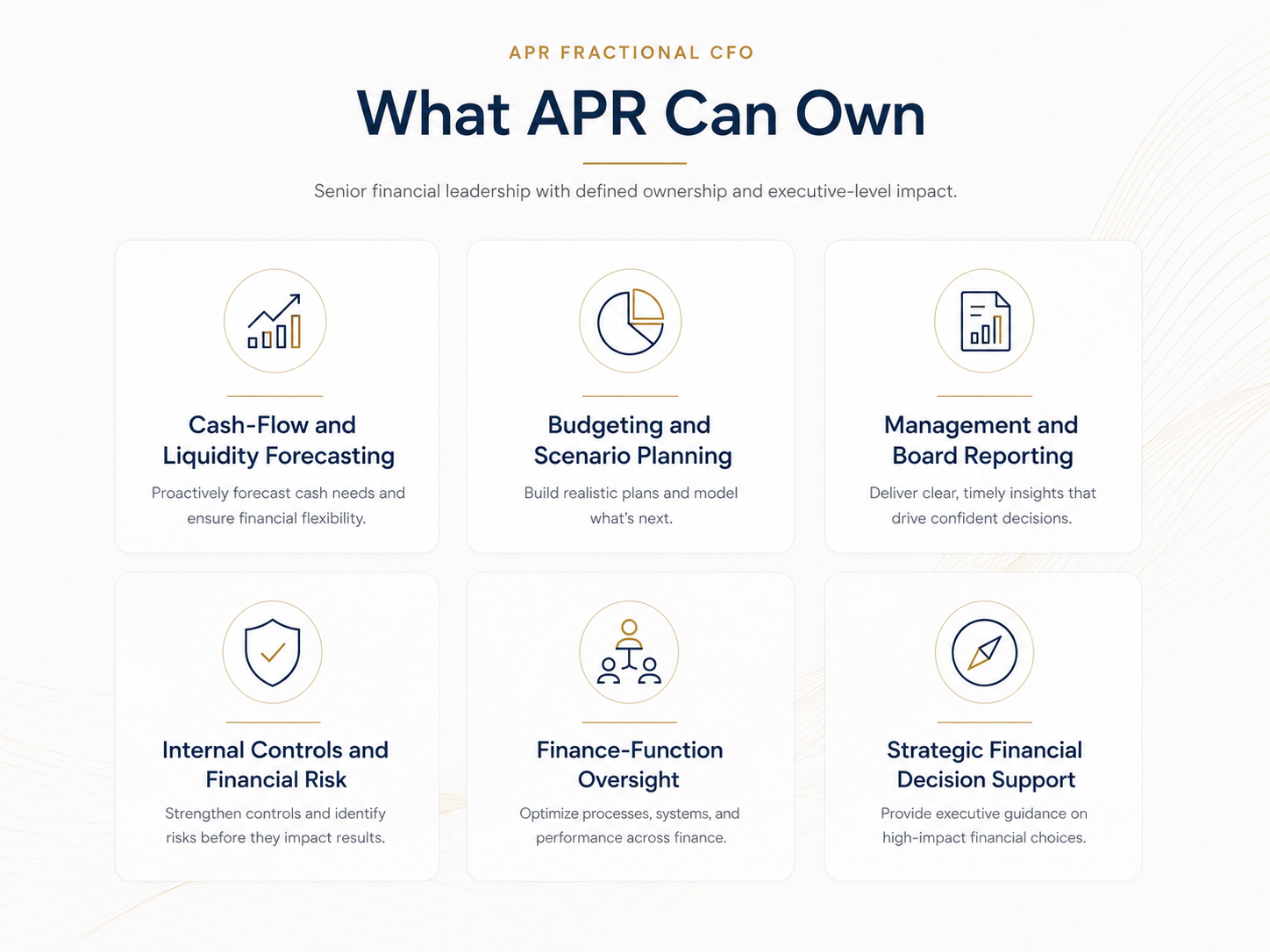
APR’s Fractional CFO role focuses on the financial leadership layer: forecasting, management reporting, scenario planning, financial controls, finance-function coordination, and executive decision support. The goal is to help leadership understand what the numbers mean, what is changing, and what decisions should follow.
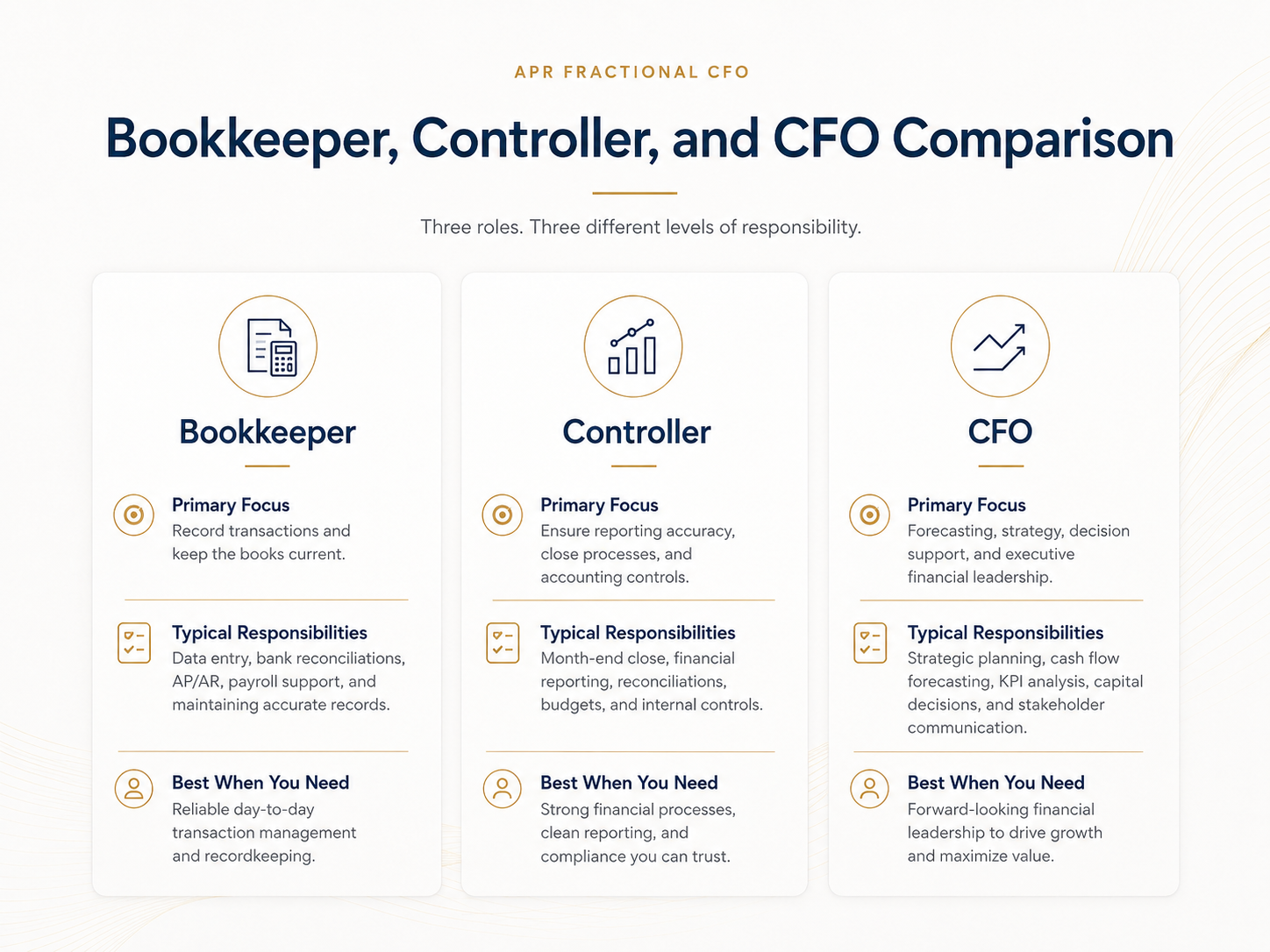
Do You Know the Difference Between a Bookkeeper, Controller, and CFO?
Bookkeepers and controllers are essential to accurate financial information. A Fractional CFO uses that information to look forward, assess risk, model choices, and advise leadership on the financial implications of strategy.
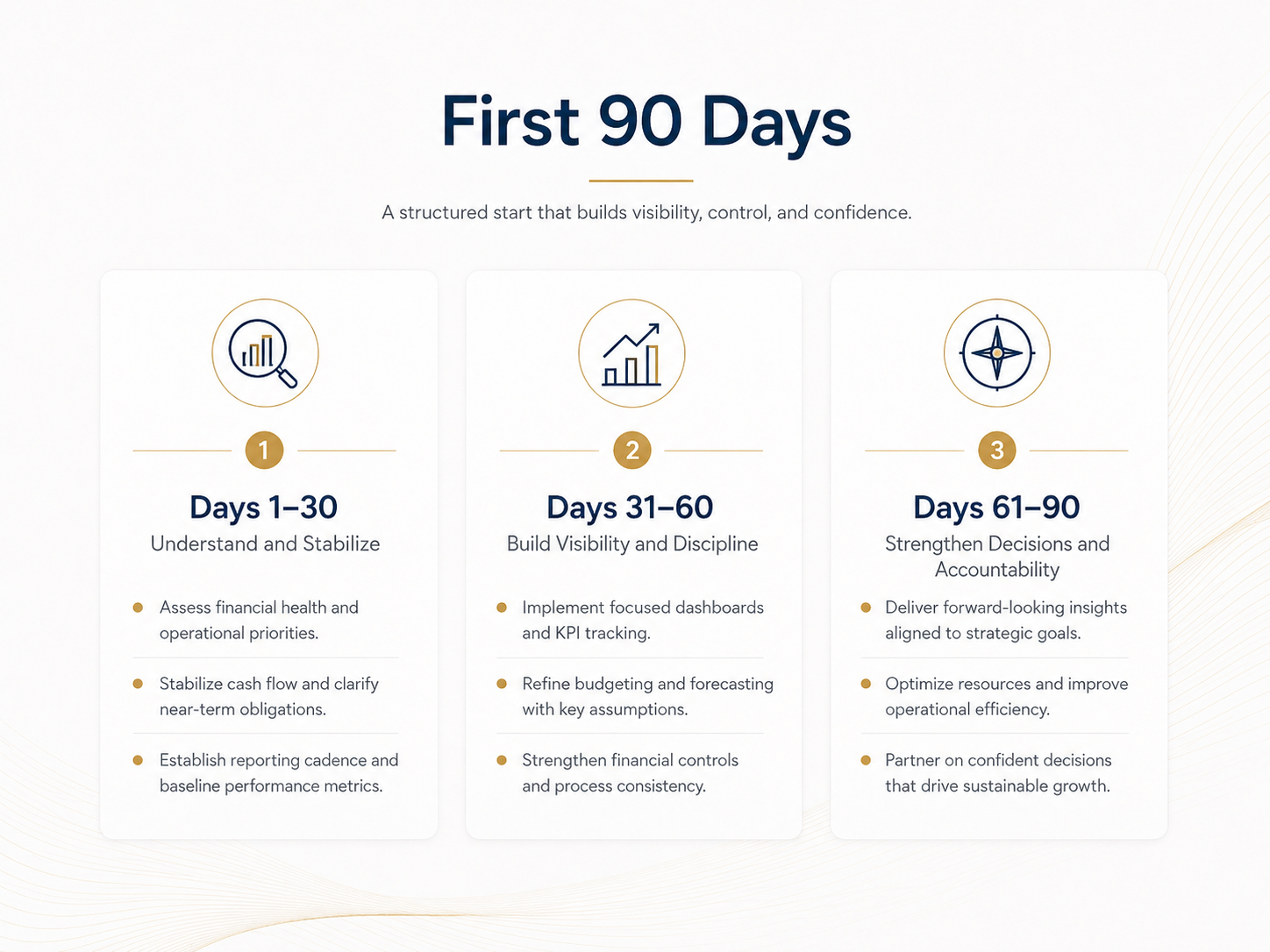
The first 90 days are typically focused on understanding the current financial-management environment, strengthening visibility and forecasting, and integrating better financial information into leadership decisions. The exact sequence is tailored to the organization rather than imposed as a standard package.
Who This Service Fits

Professional Services
Organizations that need better visibility into cash flow, project or client profitability, staffing capacity, forecasting, margins, pipeline economics, and growth decisions.

Nonprofits and Associations

Organizations that need stronger budgeting, reserve planning, financial oversight, board or finance committee reporting, program visibility, and governance support.
Higher Education

Institutions navigating financial pressure, enrollment uncertainty, complex funding environments, organizational change, or fragmented management information.
Growing Businesses
Organizations that have outgrown basic accounting support and need stronger forecasting, cash-flow visibility, management reporting, financial controls, and executive decision support as the business grows.

Government Contractors and Regulated Organizations
Organizations that need stronger financial visibility, contract or program economics, cost discipline, internal controls, forecasting, executive reporting, and decision support in environments where compliance and operational performance intersect.
When a Fractional CFO May Not Be the Right Fit
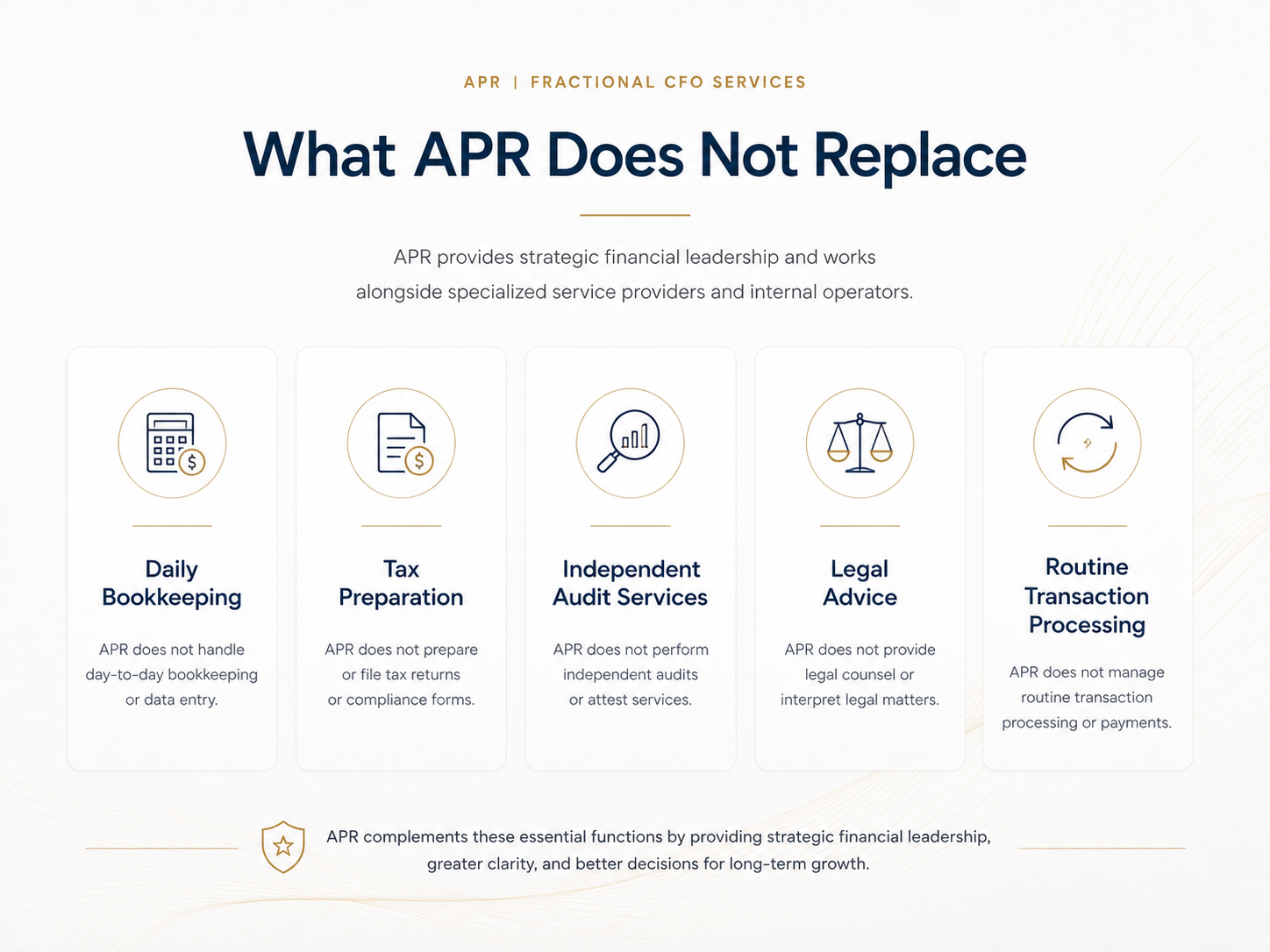
APR’s Fractional CFO service may not be the right starting point if your primary need is:
basic bookkeeping or transaction entry
tax preparation
historical accounting cleanup with no current executive-finance need
an independent audit
a full-time finance executive who will manage a large internal finance organization
technical accounting services without strategic financial leadership
If you are unsure what level of support you need, the consultation can help determine whether Fractional CFO support, a focused diagnostic, or another resource is the better fit.
What Better Financial Leadership Should Give You
Working with a Fractional CFO should leave leadership better able to answer:
How much cash do we have, and what will we need?
What is driving financial performance?
Which clients, programs, contracts, or services create or consume margin?
Can we afford our next hire, investment, or expansion?
Where is financial risk developing?
What happens under different scenarios?
Which financial decisions require leadership attention now?
What should the board or finance committee understand?
Are financial responsibilities and controls appropriate for the organization's size and complexity?
Frequently Asked Questions
-
A fractional CFO does the strategic financial work a full-time CFO would, without the full-time cost or commitment. That's cash flow forecasting, budget-to-actual analysis, board and investor reporting, and giving ownership real numbers to make decisions with instead of a gut check. At AnchorPoint Rising, we scope hours to what you actually need: a few hours a week for ongoing forecasting, or a heavier lift during budget season or a bank refinance.
-
A controller keeps the books accurate. A CFO decides what to do with what the books say. Your controller owns the close process and makes sure the financial statements are right. We sit above that layer: interpreting the numbers, building forecasts, flagging risk before it becomes a crisis, and advising on pricing, staffing, and growth. Most of our clients keep their controller in place. We work alongside them, not instead of them.
-
No. We're not a replacement for your bookkeeper or your CPA, we work with them. Your bookkeeper handles day-to-day transactions. Your CPA handles tax filings. AnchorPoint Rising handles the layer above both: forecasting, planning, board reporting, decision support. One of the first things we do in a new engagement is map out who owns what, so nothing falls through the cracks.
-
Engagements are scoped around the financial leadership the organization actually needs rather than a predetermined number of hours. Some organizations need ongoing forecasting, reporting, and executive decision support. Others need more concentrated CFO involvement during budgeting, growth, financing, organizational change, or another major transition. We define the responsibilities, expected outcomes, leadership cadence, and level of support before the engagement begins.
-
We usually begin with recent financial statements, the current budget or forecast, cash-flow information, management or board reporting, and a discussion of the major decisions leadership is trying to make. Depending on the engagement, we may also review accounting-system outputs, organizational responsibilities, contracts, pipeline information, staffing plans, and other operating data. The goal is not simply to collect financial records. It is to understand how financial information is being used to manage the organization.
-
Yes, and it's one of the more common reasons clients bring us in, especially nonprofits, foundations, and higher ed institutions. We build the reporting package, translate the numbers for board members who aren't financial by training, and often sit in on meetings to field questions directly.
-
Yes. Most engagements run fully remote: video calls, your existing accounting software, reporting shared through whatever system you already use. In-person visits happen occasionally, usually for board meetings or a planning session, but they're the exception, not the standard.
-
The appropriate length depends on the problem being solved. Some organizations need Fractional CFO leadership through a defined transition, planning cycle, or financial-management improvement. Others retain ongoing CFO support as part of their leadership model. APR defines the expected scope, outcomes, and review points at the beginning of the engagement so both sides know what success should look like.
-
Fractional CFO pricing varies based on organizational complexity, the level of executive ownership required, the condition of existing financial systems, and the outcomes the CFO is expected to own. A business that needs monthly forecasting and executive reporting requires a different engagement than an organization navigating rapid growth, financing, restructuring, or major organizational change. APR scopes the engagement after an initial consultation so the investment reflects the actual leadership need.
-
A Fractional CFO often becomes valuable when the organization's financial questions have moved beyond “Are the books accurate?” to questions such as “Can we afford this decision?”, “What happens to cash if we grow?”, “Which clients or services are actually profitable?”, “What risks are developing?”, and “What should leadership do next?” If accounting reports are available but leadership still lacks financial confidence, the organization may have reached the point where CFO-level support is appropriate.
-
We work with businesses across the country, including New Hampshire and Maine, (Portsmouth, Dover, Concord, and Berwick areas).