Fractional COO Services That Turn Priorities into Accountable Execution
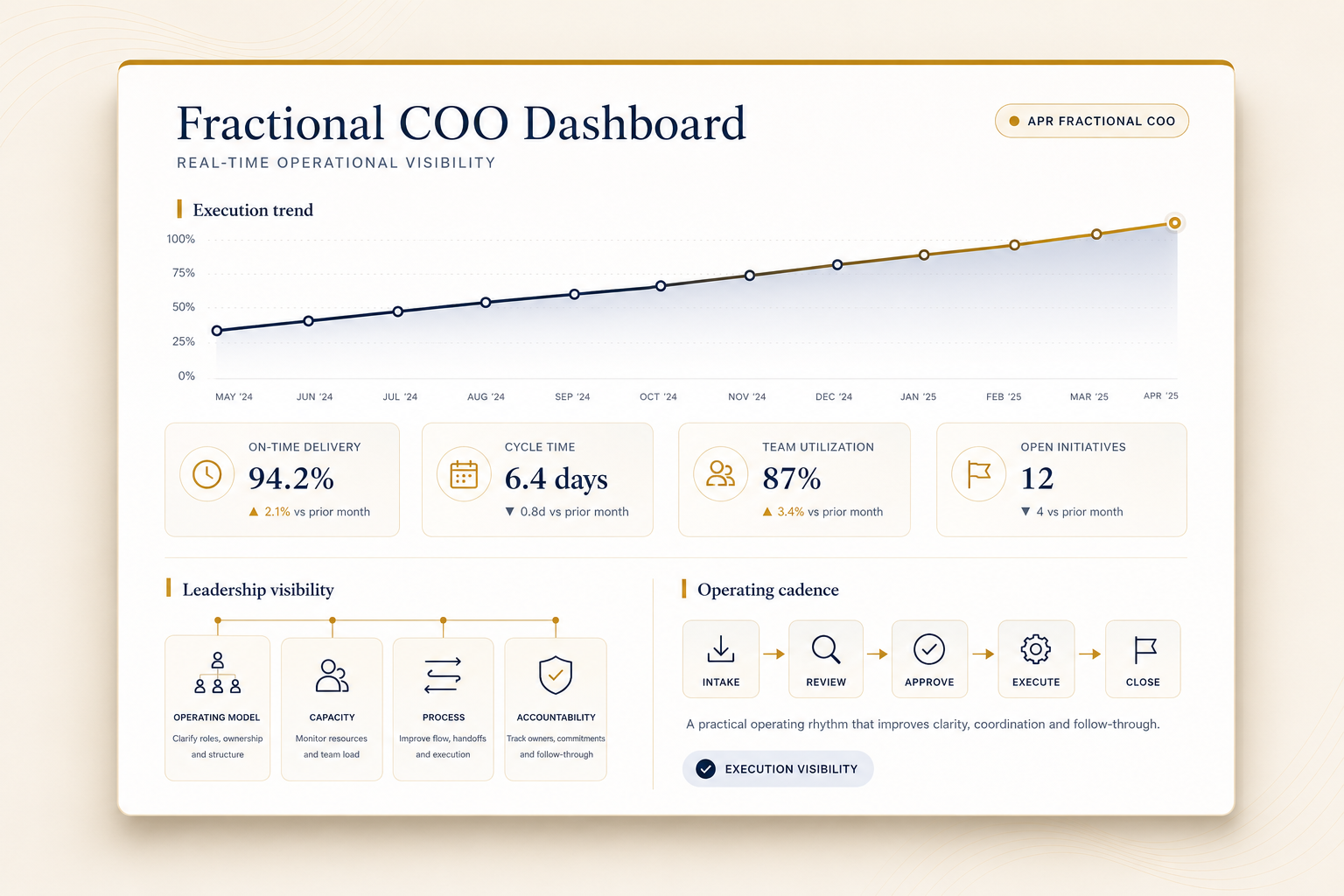
APR provides embedded operational leadership for organizations that need someone to own execution, align functions, clarify decisions, and build systems that do not depend on the CEO carrying everything.
Signs You Need a Fractional COO
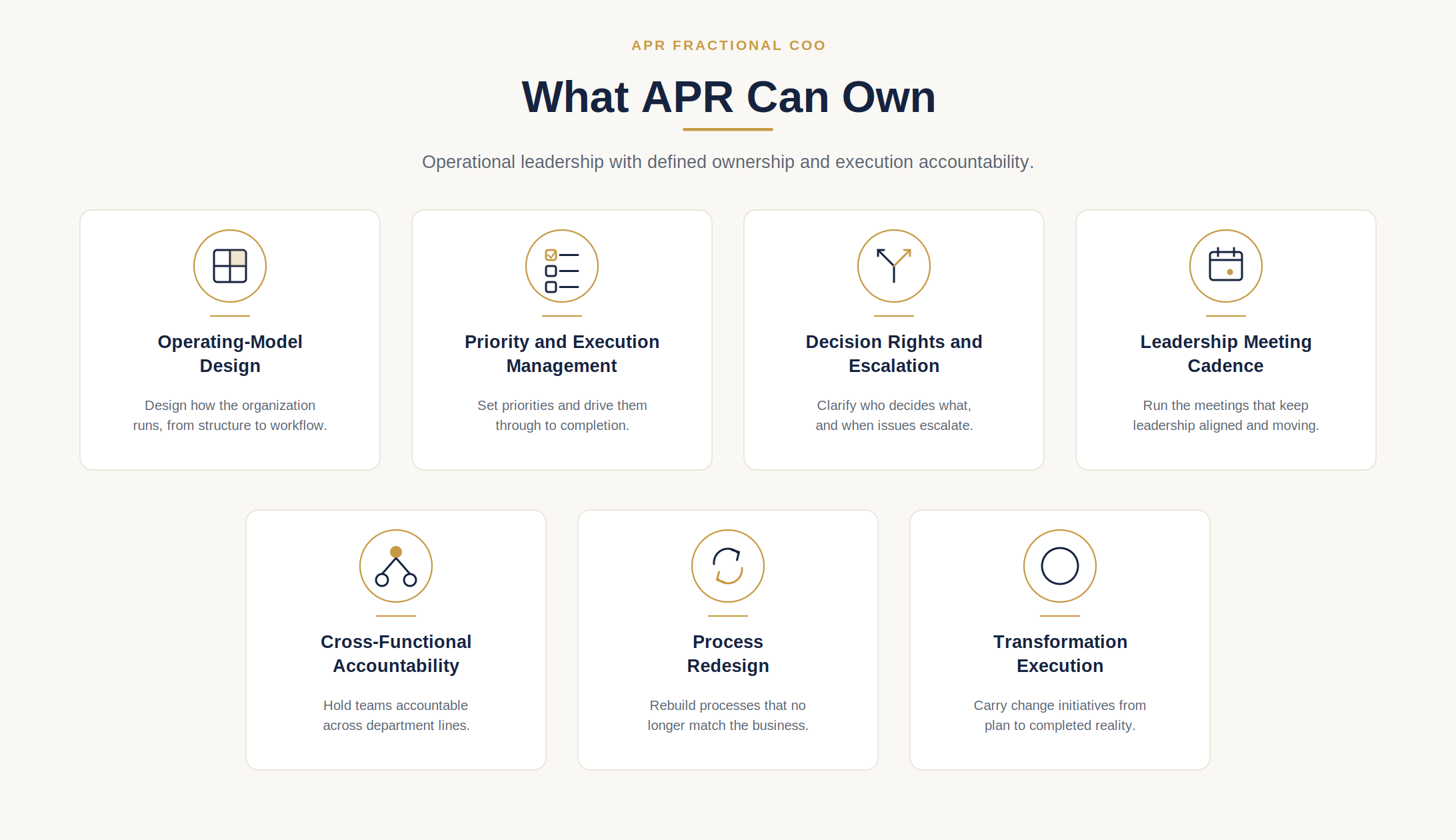
The same issues return in every leadership meeting.
Teams are busy but outcomes remain unclear.
The CEO is serving as the organization’s operating system.
Priorities do not consistently become completed work.
Decision authority is fragmented.
A reorganization changed reporting lines but not how work gets done.
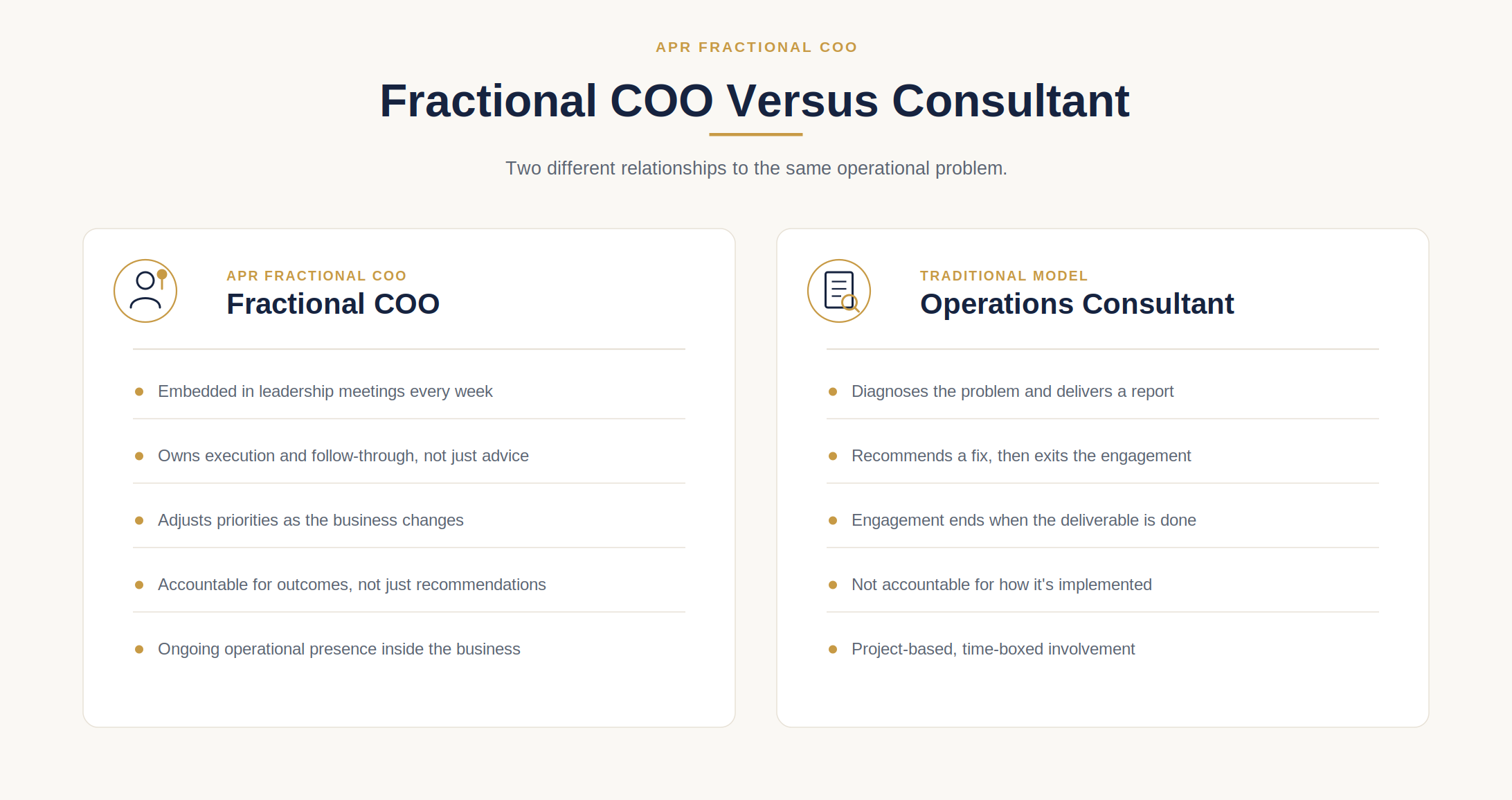
Do You Know the Difference Between a fractional COO and an operations consultant?
Who This Service Fits

Professional Services

Higher Education

Small Businesses
Frequently Asked Questions
-
A fractional COO runs the operational side of your business part-time: process, systems, staffing structure, and the day-to-day execution that keeps a growing organization from tripping over itself. At AnchorPoint Rising, that typically means building out standard operating procedures, fixing workflow bottlenecks, setting up KPIs leadership actually looks at, and managing cross-functional projects that don't have a clear owner yet.
-
A consultant hands you a report and leaves. A fractional COO stays and runs the operation. Consultants typically diagnose a problem, recommend a fix, and exit once the deliverable's done. We're embedded: setting priorities week to week, sitting in on leadership meetings, and owning the follow-through on whatever gets decided. If a recommendation doesn't survive contact with your team, that's our problem to solve, not yours.
-
Often, yes, though it depends on how the engagement is scoped. Some clients want us managing specific functions or teams directly, especially during a transition or a leadership gap. Others want us working through their existing managers, coaching them rather than replacing them. We'll figure out which model fits during scoping, and it's not unusual for that to shift as the engagement goes on.
-
Most engagements run somewhere between one day a week and several days a month, depending on how much operational complexity there is to manage. A business mid-restructuring needs more hands-on time than one that just needs quarterly process reviews. We scope hours around what's actually happening in the business.
-
Most engagements start within one to two weeks of signing. The first week is usually spent getting access to systems, meeting the team, and mapping out what's actually going on operationally before we touch anything. If there's an active fire, a leadership departure or a deadline you're up against, we can move faster; tell us what you're dealing with and we'll scope a start date around it.
-
Yes, this is one of the more common reasons clients bring us in. Whether it's a departing executive, a reorganization, or a merger integration, we step in to keep operations running while the transition happens, then help stand up whatever structure comes next. We've supported this across small businesses, higher ed institutions, and government-adjacent organizations.
-
Yes. Most engagements run fully remote: video calls, your existing accounting software, reporting shared through whatever system you already use. In-person visits happen occasionally, usually for board meetings or a planning session, but they're the exception, not the standard.
-
We hand off documentation, not dependency. Before an engagement closes, we make sure your team has the processes, reporting, and institutional knowledge to run without us, written down, not just in our heads. Some clients bring APR back for periodic check-ins after that; others don't need to. Either way, the goal is for the business to be less reliant on us at the end than it was at the start, not more.